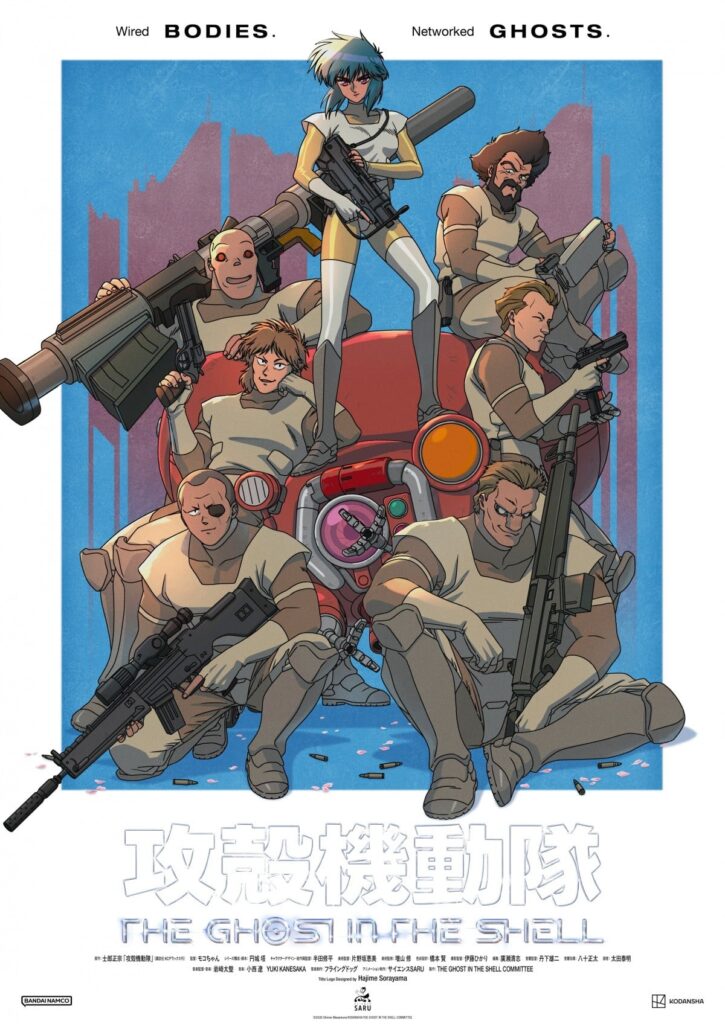
I’ve been waiting with a bit of drool on my face to watch studio Science Saru’s “The Ghost in the Shell” since it was first announced last year, in 2025. GitS is one my favorite franchises ever. However—it is a series with some hits and some misses.
I won’t point out any of the entries specifically, but I will say that what seems to have made the film version of Ghost in the Shell a global phenomenon in 1995 was its unique blend of cutting edge animation, complex characters, and plots informed by some of the oldest philosophical questions in human history set on a cyberpunk stage.
Very few creative works are able to pull all of that off: yes, including some of GitS’ own installments. So, a few weeks ago in late June 2026, I began to worry. A few people online had said they’d seen special two-episode previews of The Ghost in the Shell and panned it. There was too many ‘gags’; the pacing was too fast; the art looked like it was drawn with crayons.
But the internet has a habit of hating everything (and loudly), so I decided, as lifelong GitS fan who has tried every adaptation, to give the show a shot.
And I’m very happy I did.
It is very important to point out that Science Saru is the animation house behind The Ghost in the Shell, because they have earned a reputation for cutting-edge animation (check), with stories featuring complex characters (check), and stories that investigate the human condition (check).
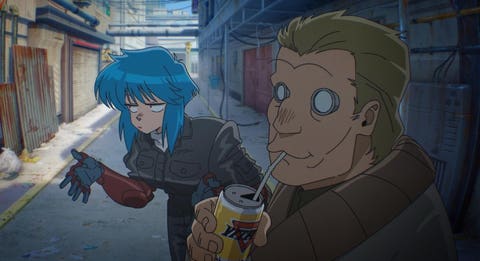
In this adaptation Studio Saru made the choice not only to go back to the roots of the series and adapt the story of the original 1989 manga “Ghost in the Shell” by Masamune Shirow, but to also reflect its artistic style.
Character outlines are rough. The colors use cel-shading. Characters have expressions and designs that look like they were lifted directly from a 1980’s manga.
The most recent adaptation of GitS, the Netflix-produced “Ghost in the Shell: SAC_2045,” was the first in the series to be made completely with computer animation. It was the most digital GitS yet, but received a lot of criticism over the mechanical movements and expressions of its characters.
Comparatively, “The Ghost in the Shell” feels deeply—real. Not ‘realistic,’ but real. It is, like the worldwide phenomenon 1995 film, drawn by hand. It also make specific decisions to tell a specific story in a specific way—unapologetically. It’s going to be a controversial anime. Not because it’s not good, but because it’s not only doing things no anime is doing right now (seriously, the funny faces some of the characters make during lighter moments haven’t been shown in anime in years), but it’s also doing things that no other GitS show or film has done.
The Major is not flawless, she’s not untouchable. She’s not the perfect soldier we’re used to. In the main battle sequence of the first episode, I was shocked when the show made this very clear to me.
While the Major and her team are the best of the best, theirs is a new unit and they’re still getting used to things and to each other. And while I think The Ghost in the Shell is going to be one of the best GitS entries in years, I think it’s also going to be a controversial one. People are used to the voice actors, the characterization, and the overall mood of everything since 1995.
But what if instead of a movie we got a season of television? What if we had 20 hours instead of 2 to try to understand these characters?
I’ll close on this: Towards the middle of the second episode, we get to see the Major on vacation with some girlfriends. We see her do something we rarely see in any GitS story: we see her enjoying herself.
And honestly, what’s the point of having a “Ghost” if you’re going to act like a machine all the time anyway?
★★★★★